
The Headlines Said It Was Chaos. The Results Show It Was A Sequence. (Part 5)
By Mike Neubauer, Grand Vision Companies
March 30, 2026 | 9 Min. Read
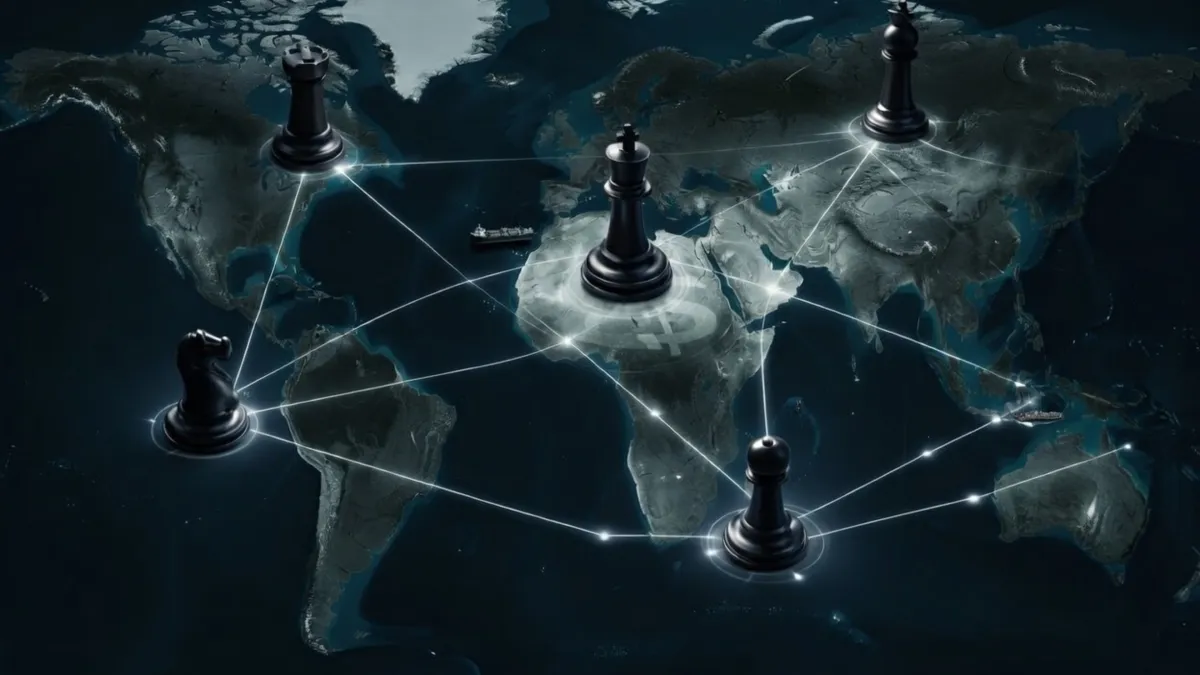
Right Now, as You Read This, the United States Is at War.
You probably found out the way most people did.
A notification on your phone. A breaking news banner. Maybe you were scrolling and it just appeared between a recipe video and a funny meme.
Either way, the message read the same:
“The United States is bombing Iran.”
And then the details started coming in.
They killed Iran’s Supreme Leader.
They destroyed military bases.
They hit nuclear sites, missile facilities, naval ships, and command centers across the country.
The operation had a name - Epic Fury - and it had clearly been planned for a long time.
Within hours, Iran retaliated.
Missiles and drones hit U.S. bases across the Middle East.
Oil infrastructure in Saudi Arabia was struck.
Ships in the Strait of Hormuz were attacked.
And then Iran did what the energy world feared most…
And what the United States already knew was coming.
They closed the Strait of Hormuz.
If you do not know what that means, you are about to.
Twenty percent of the world's oil supply flows through that strait every single day. It is a narrow strip of water between Iran and Oman - less than 30 miles wide - and it is the single most important chokepoint in the global economy.
When it closed, the consequences hit the world like a shockwave.
Here in America, you noticed gas prices climbing. Maybe you grumbled at the pump. Maybe you saw a headline about oil prices and kept scrolling.
But what is happening in other countries right now is something most Americans have no idea about.
In parts of Asia, gas stations have gone dark.
Not low on fuel. Completely empty.
The ones that still have fuel have lines that stretch for blocks - families sitting in their cars for hours, hoping there is something left when they reach the front.
In some countries, governments have started rationing fuel - telling people how much they are allowed to buy and when.
Flights are being canceled. Not because of weather. Because there is not enough jet fuel.
The International Energy Agency called it the largest supply disruption in the history of the global oil market.
Not the largest this decade. The largest in history!
And most Americans had no idea it was coming.
Even now, weeks into this war, most people still cannot tell you why we are there.
They are just watching. Confused. Overwhelmed. Trying to piece together a story that does not seem to make sense.
And the headlines are not helping.
One day, Trump posts that the war is almost over. That Iran wants a ceasefire. That a deal is close.
The next day, Iran says they have not even talked to the U.S about a deal.
Trump says if the world needs the oil, they can reopen the Strait themselves.
Days later, he says the United States may do it since nobody else will.
He says he does not want American ground troops in Iran.
Then thousands of Marines and soldiers begin deploying to the region.
Spain closes its airspace to U.S. military flights and the internet explodes - people say that we have overreached, that we will regret losing our allies.
One headline says the war is winding down.
The next headline says it is about to escalate.
And if you are a normal person - someone with a job and a family and a life - trying to make sense of all this, it feels impossible.
It is like trying to hear a single conversation in the middle of a packed stadium. There is so much noise coming from every direction that you cannot hear the voice right in front of you.
But if you have been reading this series, you know something that most people do not.
The noise is not the true story.
The signal is.
And the signal has not changed since the first sentence of Part 1.
The United States will do whatever it takes to protect the dollar.
I know that is not what the headlines are saying right now.
I know it looks uncertain.
I know it looks like we stumbled into something we cannot control.
I know that when you see allies pushing back and images from the Middle East getting worse every day, a part of you wonders whether this was all a terrible mistake.
And I know that when you see the gas prices climbing, the reporters saying we are in too deep…
When you see the comments on social media saying this is not going as planned, you may ask yourself..
Is the U.S. just going to pull the plug and go home?
We are not.
The United States is not going to pull out of this war.
They are not going to leave the Strait of Hormuz closed.
They are not going to walk away.
Not because they are stuck. Not because they have no exit. Not because they are trying to save face.
Because walking away means one thing:
Losing the banker's chair.
And losing the banker's chair means the end of the American financial system as we know it.
The end of cheap borrowing.
The end of the dollar's dominance.
The end of the lifestyle that every American has built their life around without ever realizing what was holding it up.
That alone should tell you how this ends.
But there is something deeper here. Something that most people are not ready to hear yet.
The pain you are watching right now - the oil shock, the fuel lines wrapping around city blocks, the flights being grounded, the prices surging, the global economy shaking - that is not a side effect of the plan.
It is the plan.
The United States did not stumble into this crisis.
They set it in motion.
On purpose.
And the reason why will fundamentally change the way you understand this war, this administration, and every headline you have read for the past month.
That is coming in Part 7 of this series.
But we are not there yet.
Because before you can understand why the United States is at war right now, you need to see how we got here. You need to see the moves that came before this one. You need to see the sequence.
Because Iran is not the beginning of this story.
It is the latest move in a play that has been running since the day the blueprint was published.
And once you see the full play - once you see every move laid out in front of you - the Iran war stops looking like chaos.
It starts looking inevitable.
What If Everything You Have Been Watching Was Connected?
Think about the past 16 months.
Tariffs that shook global markets.
Navy ships blowing up boats in the Caribbean.
The capture of a foreign president in the middle of the night.
A push to take over Greenland.
And now, a full-scale military operation in Iran.
If you watched all of this from the outside, it looked like chaos. It looked impulsive. It looked like a president making random moves with no plan.
Now imagine something different.
Imagine you are sitting in the stands at a basketball game.
You have never watched basketball before.
You do not know the rules.
You do not know what a pick-and-roll is.
You do not know what an alley-oop is.
You do not know what it means to set up a play.
From your seat, it just looks like ten people running around randomly. One guy throws the ball to another guy. Someone else runs to the corner for no apparent reason. A big guy stands in the middle and does not move. None of it makes sense.
But to the coach sitting on the bench, every movement is connected. The guy running to the corner is pulling a defender out of position. The big guy standing still is setting a screen. And the ball is about to go exactly where it was always meant to go.
From the stands, it looks like chaos.
From the bench, it is a play.
That is what the last 16 months have been.
And in this article, I am going to bring you down from the stands and sit you on the bench, so you can see the play for yourself.
The Scorecard
In Part 3, we showed you the Mar-a-Lago Accord - Stephen Miran’s blueprint for how to defend the dollar, restructure the debt, and rebuild American industry.
When it was published in November 2024, it was just words on a page. A theory. An academic exercise.
Sixteen months later, those words are directing policy.
And the results are already on the board.
Let me walk you through it. Move by move.
Move One: The Toll Booth Opens
April 2, 2025. The administration called it "Liberation Day."
The United States imposed the most aggressive tariff program in modern American history. Sweeping tariffs on nearly every country on Earth. Some tariffs exceeded 100 percent - meaning the tax was more than the cost of the good itself.
The reaction was immediate and violent.
Markets dropped. Economists panicked. Politicians screamed. Cable news said it was the beginning of the end. Social media was a war zone. Half the country said the president had completely lost his mind.
But remember the highway analogy from Part 2 of this series.
For decades, other countries had been driving on America's trade highway for free - shipping their goods through our system, collecting their profits, and going home.
Meanwhile, many of them charged us tolls to use their roads. And we were footing the bill for the police that kept the whole thing safe.
Liberation Day was the moment the toll booth went up.
And like we discussed before, the toll booth is not meant to stop traffic…
It is meant to start a conversation.
Within weeks, countries started calling.
The UK came to the table first.
Then Japan.
Then South Korea.
Then the EU, the largest trading bloc in the world.
Then India, the fastest growing major economy on Earth.
Then Indonesia. Vietnam. Cambodia. Switzerland. Bangladesh.
One by one, they lined up.
By early 2026, the United States had signed or was finalizing trade agreements with 19 countries.
Now let me tell you a story about why that number should stop you in your tracks.
When I bought my first rental property, I had no idea what I was doing. I was excited. I was optimistic. And I was about to learn one of the most important lessons in business the hard way.
My tenant was late on rent. Not by a day or two. Weeks late. So I did what most new landlords do. I called. I was polite. I asked them to pay.
They gave me a reason.
It sounded believable.
I said okay, just get it to me by Friday.
Friday came. No rent. So I called again. Another excuse. Another promise. Another deadline.
This went on for weeks.
I was patient. I was understanding. I was empathetic. I told myself I was being a good person by giving them time.
But here is what I actually was: I was indecisive.
And the tenant knew it.
After a while, they stopped giving excuses. They just stopped picking up the phone entirely.
They knew there were no consequences. So why would they change?
And then one day, I filed the eviction paperwork.
My phone rang within the hour.
Suddenly the excuses were gone. Suddenly the money appeared. Suddenly every conversation that had gone nowhere for months got resolved in a single afternoon.
Nothing about the tenant changed. Nothing about the money changed. Nothing about the situation changed.
The only thing that changed was that the consequences became real.
That is the story of American trade policy for the last 20 years.
For two decades, the United States went to the World Trade Organization - the global body with 164 member countries that is supposed to manage international trade - and politely asked for fairer terms.
They followed the process.
They filed complaints.
They negotiated in good faith.
They sat at the table and waited.
And the other countries did exactly what my tenant did.
They gave excuses. They made promises. They signed agreements they had no intention of honoring. And when none of that worked, they just stopped showing up. Because they knew there were no real consequences.
Then on April 2, 2025, the United States filed the eviction paperwork.
And the phone started ringing.
Twenty years of asking nicely produced nothing. One aggressive move produced 19 agreements in under 12 months.
That is what happens when the consequences finally become real.
But here is where I need to be honest with you. Because there is a lesson in my rental story that applies here too.
When my tenant called after I filed the eviction, we worked something out. They agreed to a payment plan. They signed a new agreement. And for a while, everything was fine.
But I knew something that most new landlords learn the hard way.
A payment plan is not a permanent solution. It is a pause. And a pause only lasts as long as the pressure behind it.
That is exactly where the trade deals are right now.
The 19 agreements are real.
Tariffs were adjusted.
Investments were pledged.
Money started moving.
But most of these deals are not ratified treaties. They are framework agreements - both sides have agreed to the direction, but the closing has not happened yet. There is still room for things to fall apart.
And here is the part that should make you pay very close attention.
The toll booth that brought everyone to the table has a shelf life. The president cannot maintain these tolls (tariffs) indefinitely.
The Supreme Court already struck down one legal basis. And, the replacement toll booth has a built-in expiration date.
Tariffs got everyone to the table.
But tariffs alone will not keep them there.
Something else has to.
And if you are wondering what that something is - if you are wondering what kind of pressure is powerful enough to make 19 countries stay in a deal even after the tariffs fade - take another look at what is happening in the Middle East right now.
Most people believe the Iran war is about oil. It is.
But it is just as much about making sure those 19 payment plans stay in place.
But, that is a story that we will uncover in Part 7.
Move Two: The Boats Nobody Talked About
While the tariff headlines dominated every news cycle, something else was happening in the Caribbean Sea.
Starting in late 2025, the U.S. Navy began striking boats off the coast of Venezuela.
The official explanation? Counter-narcotics. Cartel boats. Drug interdiction.
And that was true. But it was not the whole story. Not even close.
To understand what was really happening, think about how a detective solves a crime.
A detective does not kick down the door on day one.
He sets up surveillance.
He taps phones.
He traces money.
He identifies the network - who talks to who, who calls who when something goes wrong, who panics, who runs, and who reaches for their wallet.
The detective does not just want to catch the suspect. He wants to map the entire operation before he makes his move.
That is what the cartel boat strikes were.
They were test runs.
When the U.S. Navy blew up a boat in the Caribbean, the explosion was not the point. The intelligence gathered in the 30 seconds after the explosion was the point.
Who called who?
Whose phone lit up?
Which Maduro official suddenly made an encrypted call to which general?
Which bank account got a frantic withdrawal?
Which port saw a sudden change in activity?
Every boat that was destroyed was a probe. Every explosion sent a ripple through the network. And every ripple was being monitored, recorded, and mapped by U.S. intelligence agencies in real time.
By the time the actual operation happened, the United States did not just know where Maduro was sleeping. They knew who his closest security contacts were. They knew the communication chains.
They knew which officials would resist and which ones would fold. They knew the entire network.
The cartel boats were not random. They were the opening moves of an operation that had been planned for months.
Move Three: The Capture
January 3, 2026. Two in the morning. Somewhere in the Caribbean Sea.
Most of America was asleep.
New Year's confetti was still being swept off sidewalks. People were posting their resolutions and easing back into routines after the holidays. The country was quiet.
And in the darkness over the ocean, 150 military aircraft were screaming toward Venezuela.
They had launched from 20 different airbases scattered across the Western Hemisphere.
Fighters. Transport planes. Electronic warfare aircraft. Refueling tankers. All of them converging on a single target.
Caracas.
On the ground, a CIA team that had been secretly embedded in the country for months was transmitting final intelligence. They had been tracking President Nicolás Maduro for weeks - his movements, his routines, his security detail, his communications.
They knew where he slept.
They knew what he ate.
They knew who guarded which door and what time the shifts changed.
They even knew his pets.
Thousands of miles away, at Mar-a-Lago, Donald Trump was watching the operation unfold in real time.
A week earlier, he had called Maduro personally.
The message was simple: Surrender. Step down. Come quietly.
Maduro refused.
That refusal set the final phase in motion.
At 2:01 a.m., U.S. forces disabled Venezuela's air defense systems.
Minutes later, helicopters descended on the presidential compound.
Delta Force operators breached the building.
They cut through the steel. They reached Maduro. And they extracted him and his wife into the dark of night.
By late afternoon, Maduro was in New York City.
The entire operation - from the first aircraft takeoff to the president of a sovereign nation being placed on a warship - took less than three hours.
Now stop and think about that for a moment.
The planning alone took months. The intelligence gathering. The rehearsals. The coordination across 20 airbases. The risk assessment. The presidential authorization.
This was not a raid on a drug house.
This was the capture of a sitting head of state in a foreign capital, protected by armed military forces, in the middle of the night, executed with the kind of precision and scale that the United States has only attempted a handful of times in its entire history.
The last operation that looked anything like this was the one that killed Osama bin Laden.
That should tell you something about the stakes.
Because the United States does not take risks like this lightly. They do not put soldiers' lives on the line, launch 150 aircraft, and extract a foreign president from a fortified compound at two in the morning for drug charges.
The risk was worth taking because the prize was worth the risk.
Venezuela sits on over 300 billion barrels of proven oil reserves. The largest in the world. Larger than Saudi Arabia. Larger than Iran. Larger than any country on the planet.
Within hours of the capture, Trump held a press conference and said the United States would “run” Venezuela until further notice.
American oil companies would rebuild the infrastructure. American investment would flow in.
Now let me be very clear about something. This is not about the United States needing more oil.
America is already the largest oil producer in the world. We do not need Venezuela’s oil to keep the lights on.
This is about making sure that when those 300 billion barrels eventually hit the open market, they are priced in U.S. dollars.
Remember from Part 1: the dollar’s dominance is built on the fact that global trade is priced in our currency.
Every barrel sold anywhere in the world creates demand for dollars.
300 billion barrels sitting idle is 300 billion barrels not generating dollar demand.
300 billion barrels flowing through American companies, rebuilt with American capital, priced in American dollars? That is a massive reinforcement of the system that keeps the banker in the chair.
The drug charges are real. The military operation was real.
But the strategic prize was not a man in a tracksuit.
It was the oil underneath his feet.
And more importantly, the currency that it will be transacted in.
Move Four: The Dollar Drops. On Purpose.
While the headlines screamed about tariffs and military operations, something quieter was happening underneath. Something most people either did not notice or assumed was bad news.
The dollar was weakening.
Over the course of 2025, the U.S. dollar dropped approximately 9 percent on a trade-weighted basis.
If you heard that on the news, your instinct was probably to worry.
A weaker dollar sounds like a bad thing.
It sounds like decline.
It sounds like we are losing.
It is the opposite.
Remember the car lot from Part 3?
The American car that showed up in Germany at 40,000 euros while the identical Japanese car cost 30,000 euros?
The strong dollar priced the American car out of the market before the customer even turned the key.
A 9 percent weaker dollar means that same American car is already sliding toward a competitive price. Not all the way there yet. But moving. And moving in exactly the direction the blueprint called for.
And it is not just cars. It is everything American companies sell overseas.
Every product.
Every service.
Every contract.
A weaker dollar makes all of it cheaper for foreign buyers. That means more orders. More production. More jobs back home.
Most people saw the dollar weakening and felt nervous.
The people who understood the blueprint saw the dollar weakening and recognized Stage Two of the plan coming to life.
Move Five: The Battle for The Federal Reserve
While all of this was playing out on the surface - the tariffs, the drug boats, the Iran war - the most important move was happening where almost nobody was looking.
Inside the Federal Reserve.
Now most people assumed this was about the Fed Chair position.
Jerome Powell is the leader of the Federal Reserve and his term expires in May 2026.
Everyone knew Trump would name someone new.
In early 2026, he did - nominating Kevin Warsh, a former Fed Governor, and a close economic adviser who has publicly advocated for the kind of Treasury-Fed coordination that the blueprint requires.
But choosing the next chair was the easy part.
The problem was the person leaving the chair.
Most people don’t know this, but when a Fed Chair's term expires, they do not automatically have to leave the Fed.
They lose the title, but they can stay on as a Governor - a voting member of the board - for years.
While Powell will no longer be in charge after May, his governor term does not expire until 2028.
And if Powell stayed, the math changes.
Trump's appointees could find themselves in the minority on critical votes.
The safety net that Stage Three requires - the alignment between the Treasury and the Fed - could be blocked from the inside.
That is a real risk to the plan. A risk they couldn’t accept.
Now here is where it gets interesting.
Around the same time, the Department of Justice opened a criminal investigation into Powell.
On the surface, it was about a $2.5 billion renovation of the Federal Reserve's headquarters and whether Powell had misled Congress about the costs in his testimony.
Depending on who you listened to, it was about wasteful government spending. Or misrepresentation under oath. Or Trump being a bully trying to intimidate the Fed into cutting interest rates.
But if you have been following this series, you already know to look past the headline and find the signal.
And the signal was much simpler than anyone on cable news was willing to say out loud.
The plan needed Powell out of the way. And pressure was being applied to make sure that happened.
The details are not fully public. But on March 13, 2026 certain documents from the case were unsealed and made available to the public.
One line caught my attention.
It was a statement from Powell’s attorneys to the DOJ.
Here is what they said:
(Powell) feels like he would not leave the Board if he was still under investigation.
If he was not facing criminal investigation, he would be free to make a decision that would focus on his family (rather than the board).
Read that carefully.
His attorneys did not say he was fighting the investigation. They did not say he was outraged or defiant. They said he could not concentrate on his future because of the pressure.
Now you can take that at face value. Maybe his lawyers were just being honest about how their client was feeling.
Or maybe - just maybe - they were sending a signal.
The kind of signal that says: we would like this investigation to end, and we have a fair compromise.
A signal that says: the pressure is working. And if it went away, Powell might be ready to move on. Not just from the chairmanship. From the board entirely.
If Powell steps down from the board entirely, the last remaining obstacle inside the Fed disappears.
Miran stays.
Warsh leads.
And the institution that controls the dollar's plumbing is fully aligned with the blueprint for the first time.
Every piece on the board would be in position.
Every. Single. One.
Now Zoom Out. See the Board.
I need you to take a breath here.
Because what I am about to show you is the moment where this stops looking like a series of separate events and starts looking like a single coordinated strategy.
The tariffs were not chaos. They were the eviction paperwork. Twenty years of polite phone calls produced nothing. One filing brought 19 countries to the table in 12 months.
And most importantly, it brought them to the table to hear one message: things are going to look different from here on out.
Venezuela was not about drugs.
It was about 300 billion barrels of oil being brought back into the dollar system…
Not because America needs the oil, but because the dollar needs every barrel priced in its currency.
The dollar did not weaken by accident. It weakened on purpose, making American industry competitive and your retirement account quietly stronger.
And the Fed is not being stacked with political loyalists. It is being aligned with the only team willing to execute the most ambitious financial restructuring in 80 years.
From the stands, this looked like 16 months of chaos.
From the bench, it was a series of plays being sequentially executed.
Two Moves Remain on the Board
If you have followed this series from the beginning, you now see the game in a way that most Americans never will.
But there are two moves remaining that will determine whether the dynasty survives or falls.
The story is not over. The most important chapters are next.
Click here to read part 6: The Friend Who Didn't Get the Invite
-Mike Neubauer
Founding Partner, Grand Vision Family Office
P.S. If you’d like to learn more about me, and
why I take the time to write these articles,
I shared a bit more on this page.
Because common sense isn't always 'common', here is the legal disclosure: This article is for informational purposes only and does not constitute financial, investment, tax, or legal advice. Grand Vision Family Office does not guarantee the accuracy or completeness of the information provided. All investments involve risk, including potential loss of principal. Readers should conduct their own research and consult with a professional advisor before making any financial decisions. For full disclaimers, visit https://grandvision.co/family-office/disclaimers.

Copyright 2026 © Grand Vision Companies. All Rights Reserved.
Disclaimer: This website is for informational purposes only and not for reliance in evaluating the merits of investing in the Fund. No regulatory authority has approved or assessed the accuracy or completeness of this information. Prospective investors must rely on their own examination and consult professional financial, legal, and tax advisors. The Fund and sale of Interests are not registered, and registration is neither anticipated nor required. Only "accredited investors" may purchase Interests, and they must be prepared to bear economic risk indefinitely. Reselling Interests is restricted, and no public market exists for them. The General Partner does not provide investment recommendations or advice. Contents of this website are proprietary, confidential, and trade secret. Unauthorized reproduction, distribution, or use of its contents are prohibited. Forward-looking statements are inherently unreliable and subject to numerous risks and uncertainties. Investing in the Fund involves significant risks, including economic recession, market volatility, competition, legislative/regulatory changes, key personnel retention, acquisition/development challenges, financial condition of partners, tax status maintenance, and potential uninsured losses or environmental liabilities. Please review the "Risk Factors" section in the Fund's offering documents for a comprehensive understanding of risks. The General Partner assumes no obligation to update or revise statements based on new information, future events, or otherwise.